Our Craft · How Luba Is Made

How a real non-alcoholic cocktail is made

Anyone can put flavoring in sparkling water and call it a mocktail. Luba starts with real fruit juice, then leaves out the preservative that almost every other can on that shelf relies on. Which leaves one obvious question: how does it last so long?

15-26%
Real juiceCategory: 3-7%
0%
PreservativesNo Dyes
0.0%
AlcoholNothing functional

Why we're showing you this

Somebody has to decide what "made right" means in a category this young. We decided it should be us.

Most brands keep the process behind a curtain and call it proprietary. We would rather open the doors, because once you know how a drink is made you can tell a real one from flavored water in seconds.

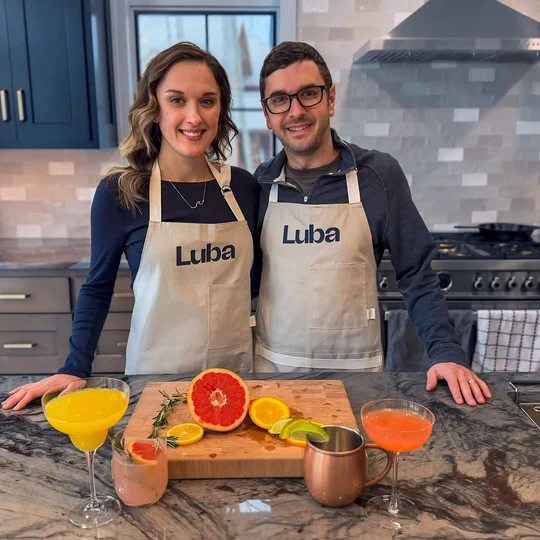
Christiana & Nic, FoundersLuba Libations, Wisconsin
Christiana & Nic, Founders
The five steps behind every can

Source · Blend · Carbonate · Can · Pasteurize

The five steps behind every can

Fruit goes in one end and a sealed can comes out the other.

SourceStart with real fruit juice

Every batch begins with real fruit juice and real ingredients: cranberry, lime, grapefruit, Peruvian ginger. We buy from first-tier vendors and pick them on quality and on how they farm, not on who quotes lowest.

The number that matters: 15% to 26% real juice, against the 3% to 7% typical of the category. It is the reason you can taste actual fruit.

BlendBlend for balance

We blend the juice with reverse osmosis water, a little real cane sugar and monk fruit for sweetness, and natural acidity for the dry finish that makes a cocktail read as a cocktail. 

We leave out artificial flavors, preservatives, artificial dyes, artificial sweeteners, stevia, adaptogens, nootropics, CBD and added caffeine.

CarbonateCarbonate for lift

We carbonate the finished blend. Not to seltzer levels, which thins the fruit out, and not so lightly that it drinks flat. Bubbles carry aroma up to your nose and sharpen the finish, so we set carbonation by taste, not by a number on a gauge.

CO₂ needs something to hold on to, and in a normal cocktail it grabs the alcohol. There's none in here, so we push carbonation to the top of what the process will take. So, drink it cold!

CanFill and seal

We fill and seal Luba into 12 oz cans at our partner cannery in Wisconsin. We close the can before anything else happens to it, and that's what makes the last step possible.

Everything that keeps Luba stable happens after the can is shut.

PasteurizeHeat instead of a preservative

Real juice sealed in a can with no preservative in it eventually starts to ferment. So, we stop that with heat rather than a chemical. We run the sealed cans through a long warm-water bath that brings the temperature up, holds it, then cools it back down. A can spends about 45 minutes in there. We call it tunnel pasteurization.

Then we check. Every run goes out for microbiology testing, and we wait five to seven days for the results before any of it ships.

The New Standard

The category's way, and the Luba way

The shortcuts that make most non-alcoholic drinks cheap and forgettable are the ones we refuse to take.

The choice How the category usually does it How Luba does it
Flavor source Sparkling water with flavoring on top. Juice usually lands at 3% to 7% 15-26% real fruit juice as the base, with no artificial flavors on top of it
Alcohol "Non-alcoholic" legally allows up to 0.5% ABV, so a trace often stays in the can 0.0%. Built without alcohol, never brewed and stripped of it afterwards
Shelf stability Chemical preservatives No preservatives at all. Heat, applied after the can is sealed, does that job
The "extra" Adaptogens, nootropics, THC and CBD,added caffeine Nothing functional. No active ingredient to drink around
How it drinks Sweet. Closer to a soda than to a cocktail Dry, with a finish. The way a cocktail is meant to end
Sweetness Heavy sugar, or artificial sweeteners A little real cane sugar and monk fruit. No stevia
Color Artificial dyes The real color of the fruit
The process Proprietary. Go looking for a process page and you will not find one Blend real fruit juice for balance, carbonate for lift, fill and seal, then heat instead of adding a preservative.

Swipe the table to compare

We are describing the category, not any one brand. Compare us to whichever can you like.

You do not have to take our word for it

What the judges wrote

Luba entered three flavors into the World Alcohol-Free Awards 2026. The medals matter less than what the judges wrote down.

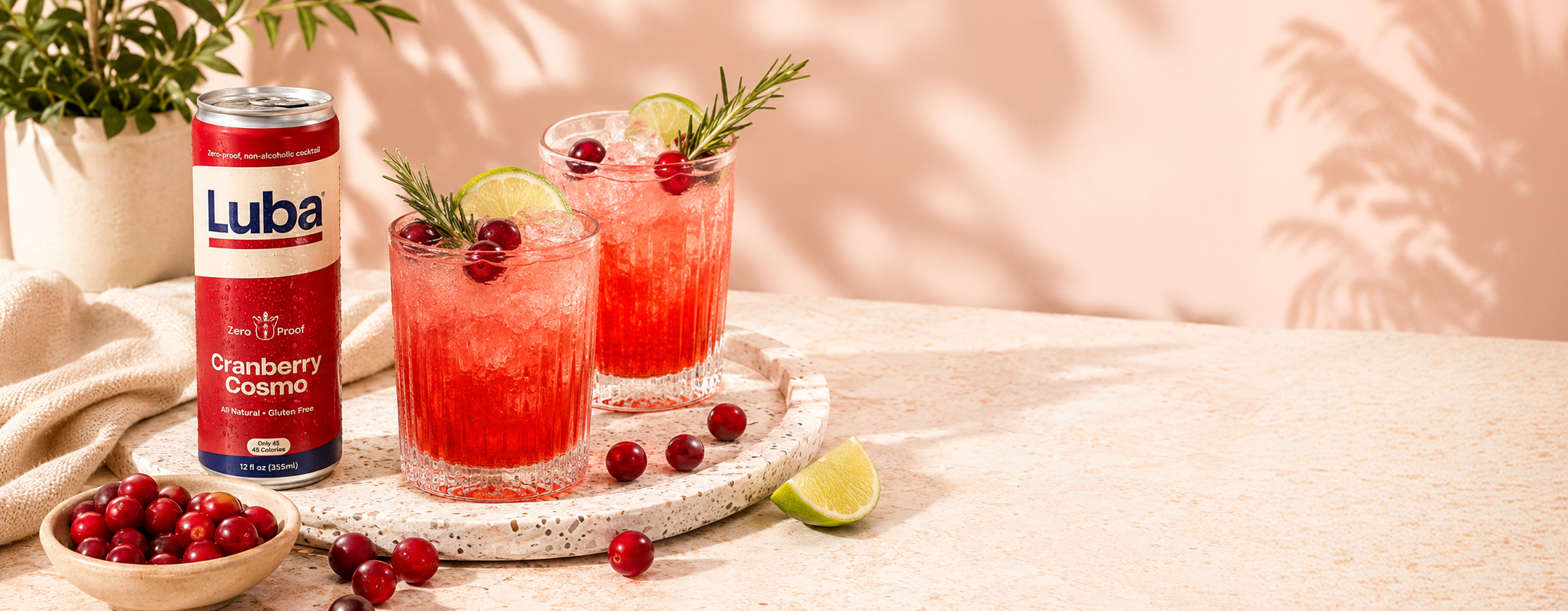
Cranberry Cosmo

Silver · World Alcohol-Free

"Dusky pink color, with flavor of hibiscus, lime and Japanese plum. Palate is delicate, dry and slightly spicy, with added flavor of cherry blossom. Complex, elegant and refreshing with a moreish grapefruit pith finish."

Judges' tasting note

Lime Margarita

Bronze · World Alcohol-Free

"Fresh, pure lemon flavor on nose and palate, all very natural tasting. Lemon zest and pith. Dry, grown-up and very moreish."

Judges' tasting note

Grapefruit Paloma

Commended · World Alcohol-Free

"Dusky pink color, with attractive aromas of mint and pink grapefruit. Fun and approachable."

Judges' tasting note

Just as important, what we leave out

Non-functional by design

A lot of what gets sold as "non-alcoholic" now arrives with something else in it. Adaptogens, nootropics, hemp, a botanical stack with a milligram count on the front. We left all of it out, because every active ingredient you add narrows the number of people allowed to enjoy the drink.

  • Adaptogens
  • Nootropics
  • THC / CBD
  • Added caffeine
  • Preservatives
  • Artificial flavors
  • Stevia
  • Magnesium